Backlinks
How to Index Backlinks: There Is No Submit Button
Every Google submission channel requires domain ownership, and a backlink sits on someone else's. What that rules out, and the four levers that remain.
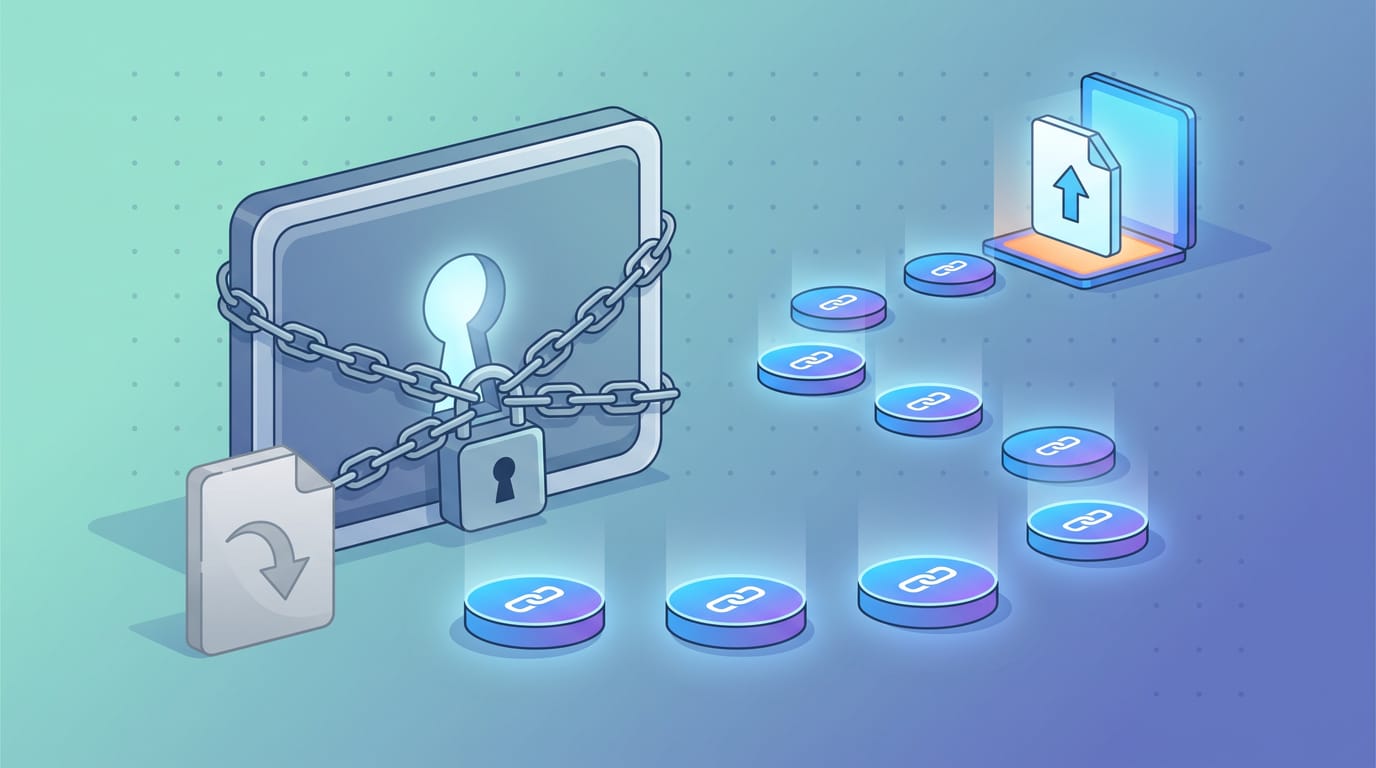
You cannot submit a backlink for indexing. Request Indexing, the Indexing API and IndexNow all require proof that you own the domain, and a backlink by definition sits on someone else's. The only lever you have is building a crawl path to that page.
That constraint is not a technicality to route around. It is the design, it applies to every tool and service equally, and it is the reason most advice on this topic quietly does not work.
Every submission channel is ownership-gated
Here is the full set of ways to tell Google about a URL, and what each one asks for first.
| Channel | What it requires | Works on a backlink |
|---|---|---|
| Request Indexing (URL Inspection) | A Search Console property you have verified | No |
| Indexing API | Verified property, authenticated service account, and JobPosting or BroadcastEvent markup |
No |
| XML sitemap | Hosted on the domain being submitted | No |
| IndexNow | A key file hosted on the domain being submitted | No, and Google does not participate anyway |
| Internal links from the same site | Publishing access to the host | No, unless you ask the host |
| External links from anywhere | Nothing | Yes, this is the one |
Five rows say no for the same reason. Google's submission surfaces are built around verified ownership because they are trusted inputs, and the trust comes from proving the domain is yours. The one row that works is the row that requires nothing, because it is not a submission at all. It is discovery.
Worth flagging: Google's own AI Overview currently recommends the Indexing API for this, with the qualifier "if you control the hosting property". You do not. That is the definition of a backlink. The same answer elsewhere notes in passing that Search Console "does not allow direct third-party backlink submissions" while still listing submission tools as the fix. If the advice you are reading contains that contradiction, it was assembled rather than reasoned.
For the fuller picture on the API specifically, see what Google's Indexing API is actually for, and for the protocol Google never adopted, IndexNow explained.
Triage before you spend anything
Before working on indexing, establish that the link is worth indexing. Three of the seven ways a backlink fails make the index question irrelevant:
- The link is gone. The page was edited, migrated or redesigned and your link went with it. Index status of a page that no longer links to you is worth nothing.
- The link is nofollowed.
rel="nofollow",ugcorsponsoredmeans Google treats it as a hint it can ignore. Indexing the page does not change that. - The page canonicals elsewhere. Google credits the canonical target, which may not carry your link at all.
Run the referring URLs through the backlink index checker with your domain filled in, which resolves all seven conditions in one pass, or the nofollow link checker if you only need rel attributes in bulk. The method-by-method version of this check is in how to check if backlinks are indexed.
Then establish which problem you actually have.
Two problems that look identical and are not
An unindexed referring page is in one of two states, and only one of them responds to effort.
Never crawled. Google has not fetched the page yet. Typical on low-authority domains, on orphaned pages nothing links to, and on anything published this week. This is a discovery problem and it is genuinely solvable.
Crawled and not kept. Google fetched it, read it, and decided against storing it. In Search Console this is the Crawled, currently not indexed state. This is a quality judgment on the page, and judgments do not respond to pinging. More on why Google makes this call: why pages get crawled but not indexed.
Everything below works on the first problem. Nothing works reliably on the second, and recognising which one you have is worth more than any technique on this page. The background on why this distinction decides the answer is in do backlinks need to be indexed.
The four levers that actually exist
1. Link to the referring page from your own indexed content
The most direct thing you control. A link from one of your own pages that Google already crawls regularly gives Googlebot a route to the referring page. A resources page, a relevant post, a "coverage" or "as featured in" page all work.
This is not a trick. It is exactly how Google discovers most of the web, and it is the same mechanism every indexing service is ultimately using.
2. Ask the host to link to it internally
Usually the highest-leverage move and the one people skip because it means sending another email.
A guest post sitting in an archive with nothing linking to it has almost no crawl demand on its own domain. One internal link from the host's category hub, recent-posts module or a related article changes that page's position in their site structure. If you have a relationship with the site, this is a small ask with a much larger effect than anything external.
It also happens to be the fix for the underlying problem rather than a workaround for the symptom.
3. Put the URL where crawlers already go
Sharing the referring page's URL on active, frequently-crawled surfaces creates additional discovery routes. This is the weakest of the four and the most oversold, so treat it as a nudge rather than a mechanism. It can help a page get found. It does not make a page worth keeping.
4. Re-outreach and move the link
The one nobody wants to hear, and the correct answer in state two.
If Google crawled the page and declined to index it, the page is the problem. Getting the link relocated to a page that is already indexed, a better-positioned article, a resources page, the host's main directory listing, converts a dead asset into a live one. That is a conversation, not a technique, and it is the only reliable fix when the page itself has been assessed and rejected.
What indexing services can and cannot do
The category is large and the claims are strong, so it is worth being precise about the mechanism rather than the marketing.
No third party has a privileged submission channel to Google. The gates described above apply to vendors exactly as they apply to you, because they are ownership checks and the vendor does not own the domain either. What a backlink indexing service can genuinely do is what any external party can do: create links pointing at the referring page so Googlebot finds a route to it. That is lever one, executed at volume.
Which sets the boundary of what to expect:
- On a never crawled page, that lever is real and can work.
- On a crawled and rejected page, it is pushing against a decision Google already made, and volume does not change decisions.
So the useful question to ask any such service is not how fast, but which of the two states it addresses. And run the check first: paying to index a link that was removed from the page last month, or that carries rel="sponsored", is a spend with no possible return.
Know when to stop
Some referring pages will not index, and that is information rather than a problem to solve.
A link on a page Google has crawled and rejected is telling you something about where the link was placed. If it happens across several links from the same campaign or the same vendor, the pattern is about the placements, not about indexing technique. The budget is better spent on placements that land on pages Google already keeps.
Verify at delivery, re-check on a schedule, and let the pattern tell you where to stop spending. That is a more durable process than any indexing method, and it is the part that almost nobody runs.
Frequently asked questions
- How do I get my backlinks indexed?
- Not by submitting them, because no submission channel accepts a page you do not own. What works is giving Google a reason to crawl the referring page: link to it from your own indexed content, ask the host to link to it internally from a page that already gets crawled, put the URL where crawlers already look, or negotiate to have the link moved to a page that is already indexed. All four are crawl-path problems, not submission problems.
- Can I use the Google Indexing API to index a backlink?
- No, for two separate reasons. The API requires an authenticated service account attached to a Search Console property you have verified, and you have not verified someone else's domain. Even if you had, Google's Indexing API officially supports only pages with JobPosting or BroadcastEvent structured data, so an ordinary blog post or resource page is out of scope regardless of who owns it.
- Can I use Request Indexing in Search Console for a backlink?
- No. Request Indexing lives inside the URL Inspection tool, and that tool only accepts URLs belonging to a property you have verified. Pasting a third-party URL into it returns an out-of-property error. There is no workaround, because verification is the entire point of the gate.
- Does IndexNow work for backlinks?
- No, twice over. IndexNow requires a key file hosted on the domain being submitted, which you cannot place on someone else's server. And even if you could, Google does not participate in IndexNow, so it would not affect your Google index status at all. IndexNow is a real protocol with real value for your own site on Bing, Yandex, Naver and Seznam, but it is not a route to indexing a backlink in Google.
- Do backlink indexer services work?
- Judge them by mechanism rather than by claim. No third party has a privileged submission channel, because the channels are ownership-gated for everyone. What such a service can do is build crawl paths to the page, usually by placing secondary links pointing at it. That is a real lever and it is the same one available to you directly. It works when the page was simply never discovered, and it does not work when Google has already crawled the page and decided not to keep it.
- Do tier-2 links help index backlinks?
- They can, when the problem is discovery. A link from an already-crawled page gives Googlebot a route to the referring page, and that is genuinely how discovery works. What they cannot do is reverse a quality judgment. If Google crawled the page and declined to index it, adding more low-value links pointing at it does not change the assessment and can make the surrounding pattern look worse.
- Is it worth indexing a nofollow backlink?
- Generally no, and this is the check to run first. If the link carries rel=nofollow, ugc or sponsored, Google treats it as a hint it can ignore, so the index status of the page it sits on is close to irrelevant for ranking purposes. The link may still be worth having for referral traffic and brand exposure. It is not worth spending an indexing budget on.
Monitor your index status automatically
SearchOptimo re-checks your URLs on a schedule and alerts you when something drops. Start free, no credit card.
Start freeKeep reading
Backlinks
Do Backlinks Need to Be Indexed? (No. Crawled, Yes)
Google's own AI gives two opposite answers. Here is the real mechanism, why index status is still the number to watch, and what to do about it.
Backlinks
How Long Do Backlinks Take to Index? (Nobody Measured)
A few days to a few weeks for the ones that index at all. Where every published figure actually comes from, and the question worth asking instead.
Backlinks
How to Check if Backlinks Are Indexed (site: Fails)
Check if a backlink is indexed: 4 methods, why site: and Search Console mislead you, and the 6 other reasons an indexed link still passes nothing.