Backlinks
Do Backlinks Need to Be Indexed? (No. Crawled, Yes)
Google's own AI gives two opposite answers. Here is the real mechanism, why index status is still the number to watch, and what to do about it.
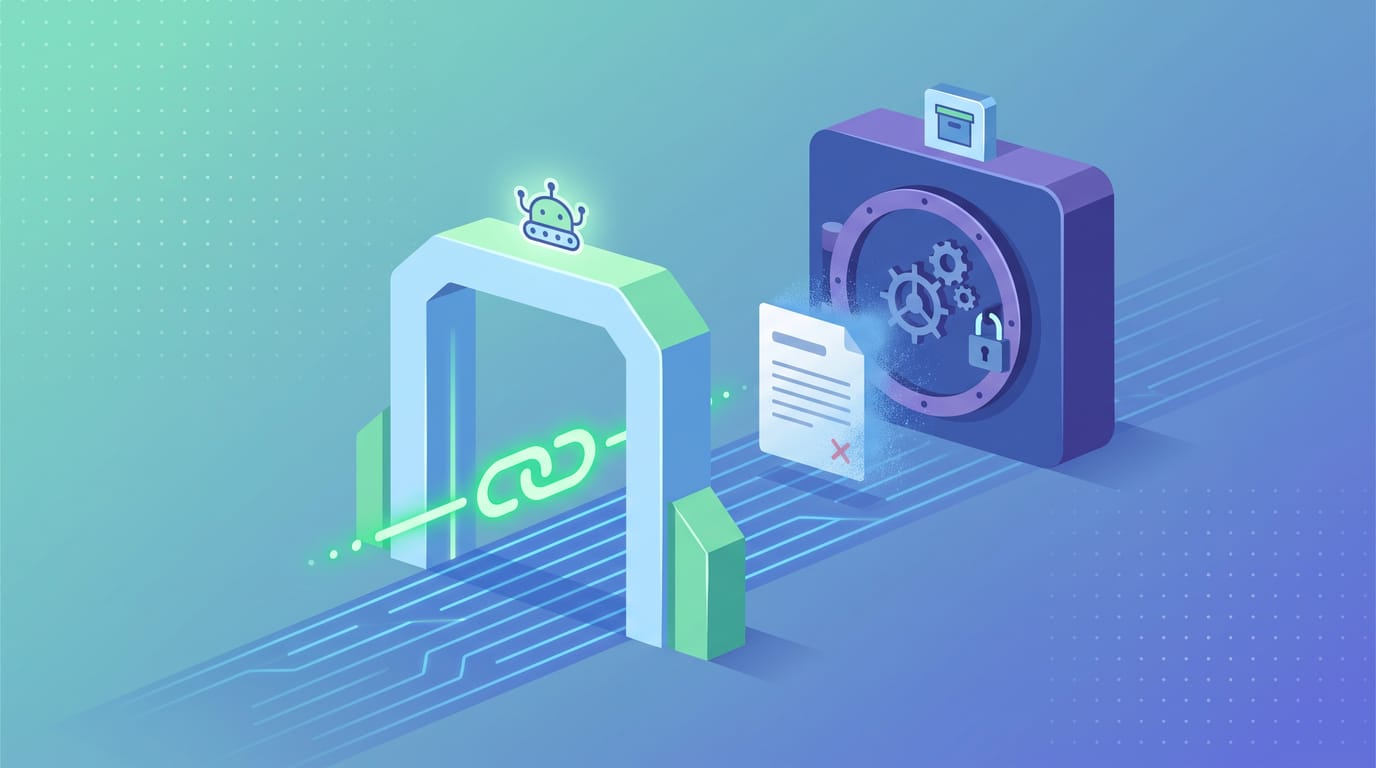
No. Indexing is not the mechanism, crawling is: Google can only pass a signal from a page it fetched and parsed. But an unindexed page is one Google either has not crawled or crawled and declined to keep.
Those two states are not the same thing, and almost nothing in this space tells you which one you are in. That is the whole answer, and the rest of this page is why the internet cannot agree on it.
Google's AI gives two opposite answers to this question
Search do backlinks need to be indexed and Google's AI Overview says the link does not need to be indexed to pass value, provided the page is crawled.
Search are backlinks useless if not indexed and Google's AI Overview says backlinks are mostly useless if the host page is not indexed.
Same question, same day, opposite conclusions. Both are pulling from real sources. Neither is lying. They disagree because the question hides two different questions inside it, and the honest answer depends on which one you are actually asking.
The mechanism: crawling is the gate, not indexing
Crawling and indexing are separate stages:
| Stage | What happens | Required for a link to pass anything |
|---|---|---|
| Discovery | Google learns the URL exists | Yes |
| Crawling | Googlebot fetches the HTML and parses the href |
Yes, this is the gate |
| Indexing | Google decides to store the page in the searchable database | No, not literally |
| Serving | The page can appear in results | No |
A link can only transmit a signal if Googlebot fetched the page and read the anchor. That is a crawl-time event. Indexing is a separate decision made afterwards about whether the page is worth keeping.
So the technically correct answer to "do backlinks need to be indexed" is no. Which is exactly why the first AI Overview says what it says, and why articles making that point are correct on the mechanism.
They are also, in practice, giving people bad advice.
Why index status is still the number to watch
Here is what the mechanism argument leaves out.
You cannot observe crawling. You can observe indexing. There is no public way to ask Google "did you crawl this third-party page". Server logs would tell you, but they are the host's logs, not yours. Index status is the only externally checkable proxy for whether Google has engaged with that page at all. Arguing that crawling is what matters is true and unhelpful, because crawling is precisely the thing you cannot measure from outside.
A crawled-and-rejected page is a judgment, not a delay. When Google fetches a page and declines to index it, that decision is recorded in Search Console as Crawled, currently not indexed. Google looked at the page and decided it was not worth storing. Treating links on that page as fully working means betting against an assessment Google has already made. It might still pass something. You are just no longer holding a position Google agrees with.
Whatever passes tends to decay. This is the strongest available evidence, and it comes from the adjacent case. With noindex, follow, Google follows the links initially. Google's John Mueller has said that over the longer term Google ends up treating a noindex page much like a page that no longer exists, with the links on it dropping out of consideration. That statement is about noindex specifically, so extending it to crawled-but-not-indexed pages is inference rather than documented behaviour. But the underlying logic is the same in both cases: Google recrawls pages it does not value less and less, and a link that is never re-read stops being reinforced.
Put together: indexing is not the mechanism, but it is the only visible correlate of the mechanism, and the case where it is absent is the case where the mechanism is winding down.
The distinction that actually decides what you do
Forget the general question. For any specific link, there are two states worth telling apart, and they call for opposite responses.
State A: never crawled. Google has not reached the page. Common on low-authority domains, on orphaned pages with no internal links, and on anything published in the last few days. This is a timing and discovery problem. It is fixable, and the fix is giving Google a route to the page. See how to index backlinks for what can and cannot be done here.
State B: crawled, not kept. Google fetched it and passed. This is a quality judgment on the referring page, and no amount of pinging changes a judgment. The realistic move is re-outreach to get the link relocated to a page that is indexed, or writing the link off and spending the effort elsewhere. Background on why Google makes this call: why pages get crawled but not indexed.
Every "are my backlinks indexed" tool collapses both states into one red X. That is the actual gap in this category, and it is why the honest version of the answer has to be state-based rather than yes or no.
Check the link before you worry about the index
There is a sequencing error underneath most of this. People discover a link is unindexed and immediately start trying to fix the indexing, without checking whether the link is worth indexing at all.
Index status is one of seven conditions, and the other six fail silently:
- The referring page is unreachable (404, 5xx, no response).
- Your link has been removed from the page entirely.
robots.txtblocks the path, so Googlebot never reads the link.- A meta robots or
X-Robots-Tagheader carriesnoindex. - The page is not in the index.
- The link carries
rel="nofollow",ugcorsponsored. - The page canonicals elsewhere, so Google credits a different URL.
If the answer is 2 or 6, the index question is moot. A removed link passes nothing regardless of how well the page is indexed, and a nofollowed link on a perfectly indexed page is still a hint Google is free to ignore.
Run the referring URLs through the backlink index checker with your domain filled in and you get all seven in one pass, rather than the one bit every other checker returns. If you only need the rel attributes across a page's outbound links, the nofollow link checker does that in bulk.
What to tell a client who asks
The short version, in the order that keeps you honest:
- Is the link still on the page? If no, nothing else matters.
- Is it followed? If it carries
nofollow,ugcorsponsored, index status is a side issue. - Is the host page crawlable? A
robots.txtblock or anoindexis a definite answer, not a maybe, and both are visible in seconds. - Is the page indexed? If yes, the link is working as far as anyone outside Google can tell. If no, find out which of the two states you are in before deciding whether to act.
- Has anything changed since you last looked? This is the one nobody checks, and it is where links quietly die.
The people who get this wrong are not the ones who answer yes or no. They are the ones who answer confidently without knowing which page they are talking about.
Frequently asked questions
- Do backlinks need to be indexed to count?
- Not strictly. Indexing is not the mechanism that passes a signal, crawling is: Google has to fetch the referring page and parse the href before anything can travel along the link. A page can be crawled and still not kept in the index. But that distinction cuts both ways, because a page Google crawled and declined to index is a page Google judged not worth storing, and Google's documented behaviour is to crawl such pages less and less over time.
- Are backlinks useless if they are not indexed?
- Useless is too strong, and certain is too confident. An unindexed referring page is in one of two very different states: not crawled yet, which is a timing problem that often resolves, or crawled and rejected, which is a judgment Google has already made. The first can still turn into a working link. The second is a link you should stop counting on. Nothing in a backlink tool distinguishes them for you, which is why the state matters more than the label.
- What is the difference between crawled and indexed?
- Crawling is Google fetching the page's HTML. Indexing is Google deciding to store that page in the searchable database. They are separate stages and the second does not automatically follow the first. Google can crawl a page, read every link on it, and still decide the page is not worth keeping. In Search Console this shows up as the 'Crawled, currently not indexed' state.
- Do links from noindex pages pass value?
- Initially yes, then decreasingly. With noindex, follow, Google will follow the links on a first pass. Google's John Mueller has said that over the longer term Google ends up treating a noindex page much like a page that no longer exists, and the links on it drop out of consideration. So a noindex referring page is a decaying asset rather than a permanently working one.
- What does 'crawled, currently not indexed' mean for a link on that page?
- It means Google fetched the referring page, read it, and decided not to store it. That is a judgment rather than a queue position, which makes it materially different from a page Google simply has not reached yet. For the link, it means Googlebot did parse the href at crawl time, so something may have passed, but the page is not being valued or recrawled at the rate an indexed page would be. Treat it as a decaying asset, not a working one.
- Do backlinks still matter in 2026?
- Yes, links remain a ranking input, but the marginal value of a low-quality link keeps falling while the cost of acquiring a good one keeps rising. That shift is the practical argument for verification: when links are expensive, confirming that the ones you paid for are actually working matters more than adding another to the pile.
- Should I pay a service to index my backlinks?
- Understand what any such service can actually do first. No third party can submit a page it does not own to Google, because every submission channel is ownership-gated. What these services can do is build crawl paths to the page, which is the same lever available to you directly. Check whether the link is even followed and still present before spending anything on indexing it.
Monitor your index status automatically
SearchOptimo re-checks your URLs on a schedule and alerts you when something drops. Start free, no credit card.
Start freeKeep reading
Backlinks
How Long Do Backlinks Take to Index? (Nobody Measured)
A few days to a few weeks for the ones that index at all. Where every published figure actually comes from, and the question worth asking instead.
Backlinks
How to Check if Backlinks Are Indexed (site: Fails)
Check if a backlink is indexed: 4 methods, why site: and Search Console mislead you, and the 6 other reasons an indexed link still passes nothing.
Backlinks
How to Index Backlinks: There Is No Submit Button
Every Google submission channel requires domain ownership, and a backlink sits on someone else's. What that rules out, and the four levers that remain.